Beyond the industries featured below, we work with professional services firms, nonprofits, financial services groups, construction and architectural teams, multi-location organizations, and many others.
Medical/Healthcare Proven IT strategies that protect data, ensure compliance, and maximize patient time.
Beyond the industries featured below, we work with professional services firms, nonprofits, financial services groups, construction and architectural teams, multi-location organizations, and many others.
Medical/Healthcare Proven IT strategies that protect data, ensure compliance, and maximize patient time.
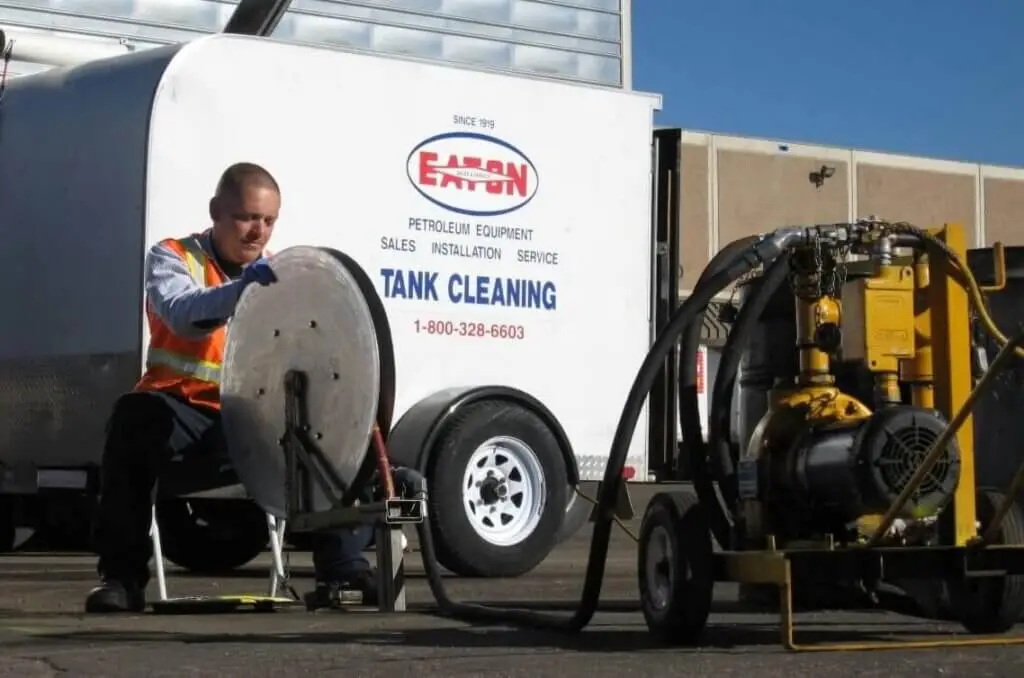
For 22 years, Ryan Ortonhas watched Eaton Metal Products grow — from a technician ripping paper job sheets off a journal printer every morning, to Vice President of Operations overseeing a company with five branches in Colorado and offices stretching across the Rocky Mountain region, from Wyoming and Utah to New Mexico and Arizona. Eaton got its start manufacturing 55-gallon steel drums and has since become a major player in downstream oil and gas, building petroleum storage vessels and serving commercial retail fueling centers and automotive service centers across the region.
That kind of growth doesn’t happen without technology keeping pace — and Eaton’s IT journey with Mytech Partners is a story of exactly that.
The Challenge: Scaling Beyond What One Person Can Cover
Before moving to a fully managed model, Eaton’s day-to-day IT needs were handled largely by a single internal IT resource — a setup that had served the company well, but one that inevitably runs into the limits of scale. As Eaton grew to five branches across Colorado and offices spanning the Rocky Mountain region, one person simply couldn’t be everywhere a ticket needed attention.
“Depending on what our IT person had, it could possibly take a couple days to get responded to when a ticket was issued,” Ryan explains. The delays created a quiet, harder-to-measure cost: employees sometimes hesitated to speak up. “Sometimes employees didn’t want to raise an issue because they knew it was going to be a delay, or it might not get to it right away.”
The Transition: From Co-Managed to Fully Managed
Eaton’s relationship with Mytech actually predates Mytech itself — the company was originally a client of IEC, which Mytech later acquired. From there, the partnership moved through a co-managed model before Eaton made the shift to fully managed services roughly two to three years ago.
To be clear, this wasn’t about replacing internal IT or suggesting an internal resource isn’t valuable — it’s about making sure everyone’s time, internal and external, is going toward its highest and best use, in a way that fits the organization’s size and needs. For Eaton, that meant pairing a broader Help Desk team with the on-the-ground institutional knowledge only an internal team member can provide.
Jeff Woods, General Manager of Mytech’s Denver Branch, has worked alongside Eaton throughout that evolution and remembers the early days well. “I remember us talking very much about the culture of your employees not wanting to put in tickets, and not feeling confident that we could solve the problems because they had a lot of delays,” he says. Today, he says, “we hear from your employees all the time — how do I do this? Or even if they’re just curious about something, they’ll reach out.”
Ryan was candid that the shift wasn’t without early nerves. “A lot of employees were concerned, but we went over it. Now everybody’s thrilled.” The reason is simple: a bigger Help Desk means requests aren’t queued behind a single point of contact anymore. Tickets get addressed faster, and employees no longer feel like they’re a burden for asking.
“A lot of employees were concerned, but we went over it. Now everybody’s thrilled.”
— Ryan Orton, VP of Operations, Eaton
The Results: Fewer Fires, More Forward Motion
The clearest sign of change, according to both Ryan and Jeff, is what the ticket queue looks like today. Break-fix tickets — the constant stream of things breaking that used to consume all of Eaton’s IT bandwidth — have dropped significantly. That freed-up capacity didn’t just disappear; it got redirected.
“It’s also allowed us to get out of just that day-to-day grind of nothing but break-fix tickets, to where we’ve been able to actually do some system improvements,” Ryan says. “We’ve been able to make our cybersecurity, within the organization, better.”
Jeff has tracked that shift from the other side of the relationship. “I’ve watched that ticket count go down, and then it starts to turn into proactive tickets — how do I do this, how do I do that. Which is exactly what we were hoping to do.” He’s quick to point out that the pace of change at Eaton has outstripped most clients he’s worked with: what he expected to take five or six years happened in two.
“I’ve watched that ticket count go down, and then it starts to turn into proactive tickets — how do I do this, how do I do that. Which is exactly what we were hoping to do.”
— Jeff Woods, General Manager, Mytech Denver Branch
Cybersecurity has been a particular area of progress, driven partly by PCI compliance requirements tied to credit card processing, partly by the criteria Eaton needs to meet for cyber insurance, and partly by customer contracts that expect a baseline level of protection for their data. A fully managed Help Desk gave Eaton’s team the bandwidth to actually address those requirements instead of just keeping the lights on.
Perhaps the most tangible symbol of the transformation sits in Eaton’s server room. Ryan had long avoided bringing anyone back there — “kind of embarrassed of what a mess it was.” That changed with a major switch and VLAN overhaul the team just wrapped up: a weekend project substantial enough that the crew worked late into Saturday night and returned early Sunday to finish the job. The result is a server room Ryan is now glad to show off. “It’s a huge improvement,” he says. “I don’t mind showing them now — kind of proud of it.”
“It’s a huge improvement. I don’t mind showing them now — kind of proud of it.”
— Ryan Orton, VP of Operations, Eaton
Why Local Still Matters
Even as more IT providers scale up, go national, or move through private equity, Ryan is clear that having a local partner factored into Eaton’s decision-making — the same way it did when Eaton chose a marketing partner based in Denver. “It’s easier — whether that’s somebody with a server coming and they’ve got to physically do something, or if something’s going wrong and you need to address it,” he says. “I always like to be able to sit down face-to-face if we have to. I think those meetings face-to-face are a lot more productive than a phone call, or even a virtual meeting.”
“I always like to be able to sit down face-to-face if we have to. Those meetings are a lot more productive than a phone call, or even a virtual meeting.”
— Ryan Orton, VP of Operations, Eaton
That matters even more right now. Technology — and especially AI — is moving fast enough that having a partner nearby to sit down, work through what’s changing, and figure out what actually applies to Eaton’s business is a real advantage. It’s one thing to get a support ticket answered quickly; it’s another to have someone local who can help think through strategy as the landscape shifts underneath everyone.
Why It Worked
Ask Ryan what he’d change, and he doesn’t point to the technology — he points to adoption. Eaton, like most organizations, has a range of comfort levels with new tools, from employees who dive in headfirst to those who’d rather not turn the computer on. That’s a challenge Mytech and Eaton continue to work through together, department by department.
But on the core question — did moving to fully managed IT make a difference — the answer from both sides is unambiguous. Fewer delays. Faster resolutions. A team that isn’t afraid to raise its hand. A local partner Eaton can sit down with face-to-face. And the bandwidth to help Eaton get ahead of problems instead of just reacting to them.
As Eaton continues to grow across the Rocky Mountain region, that foundation matters. It’s the difference between IT that keeps the lights on and IT that helps a 22-year track record — and counting — keep building.
Key Takeaways
Fully managed IT doesn’t replace internal IT — it’s about putting people’s time toward its highest and best use, sized to what makes sense for the organization.
A bigger Help Desk means faster response. Moving from one internal point of contact to a full team cut ticket delays and reduced the backlog of unreported issues.
Freed-up time gets reinvested. As break-fix volume dropped, Eaton’s IT capacity shifted toward proactive work — including meaningful cybersecurity improvements tied to PCI compliance, cyber insurance requirements, and customer expectations.
Local presence still matters, especially with technology and AI changing quickly. Being able to sit down face-to-face with an IT partner — not just call one — was a deciding factor for Eaton.
Culture change takes time and trust, but it’s measurable. Ticket volume and type (reactive vs. proactive) are a real signal of how a managed services relationship is maturing.
FAQ
What’s the difference between co-managed and fully managed IT? Co-managed IT splits responsibility between an internal IT resource and an outside provider, who typically supports the internal team. Fully managed IT shifts day-to-day support — like the Help Desk — to the outside provider, freeing internal staff (where they exist) to focus on higher-level, organization-specific work.
Does switching to fully managed IT mean a company doesn’t need internal IT anymore? No. Fully managed IT is about making sure both internal and external resources are focused on their highest and best use — not eliminating internal roles. For organizations where an internal hire makes sense, that person’s institutional knowledge remains valuable alongside a managed services partner.
Why does having a local IT provider matter? A local provider can be on-site quickly for hands-on issues like hardware and server work, and can meet face-to-face — something Eaton’s Ryan Orton points to directly as more productive than phone or virtual meetings. That local relationship becomes even more valuable as fast-moving changes, like AI adoption, require ongoing strategic conversations, not just support tickets.
What results did Eaton see after moving to fully managed IT? Faster ticket response times, a significant drop in break-fix issues, improved cybersecurity posture, and a cultural shift where employees now proactively reach out with questions instead of sitting on problems.
Mytech Partners delivers managed and co-managed IT services, cybersecurity consulting, Microsoft 365 consulting, and AI consulting to help organizations reduce risk and eliminate IT friction since 2000.
Let’s talk about your organization, your goals, and how our SmartBusiness Suite Managed IT Services can eliminate recurring issues and simplify technology for your entire organization.