



The constant cycle of “putting out fires” isn’t a sign that your technology is failing; it’s a sign that your organization is paying high interest on accumulated technical debt. You’ve likely felt the sting of unexpected downtime or the nagging anxiety of invisible cyber threats. It’s frustrating when common IT problems in small businesses feel like an endless loop of expensive band-aid fixes that never actually solve the underlying issues. You deserve a foundation that supports your goals rather than one that constantly obstructs them.
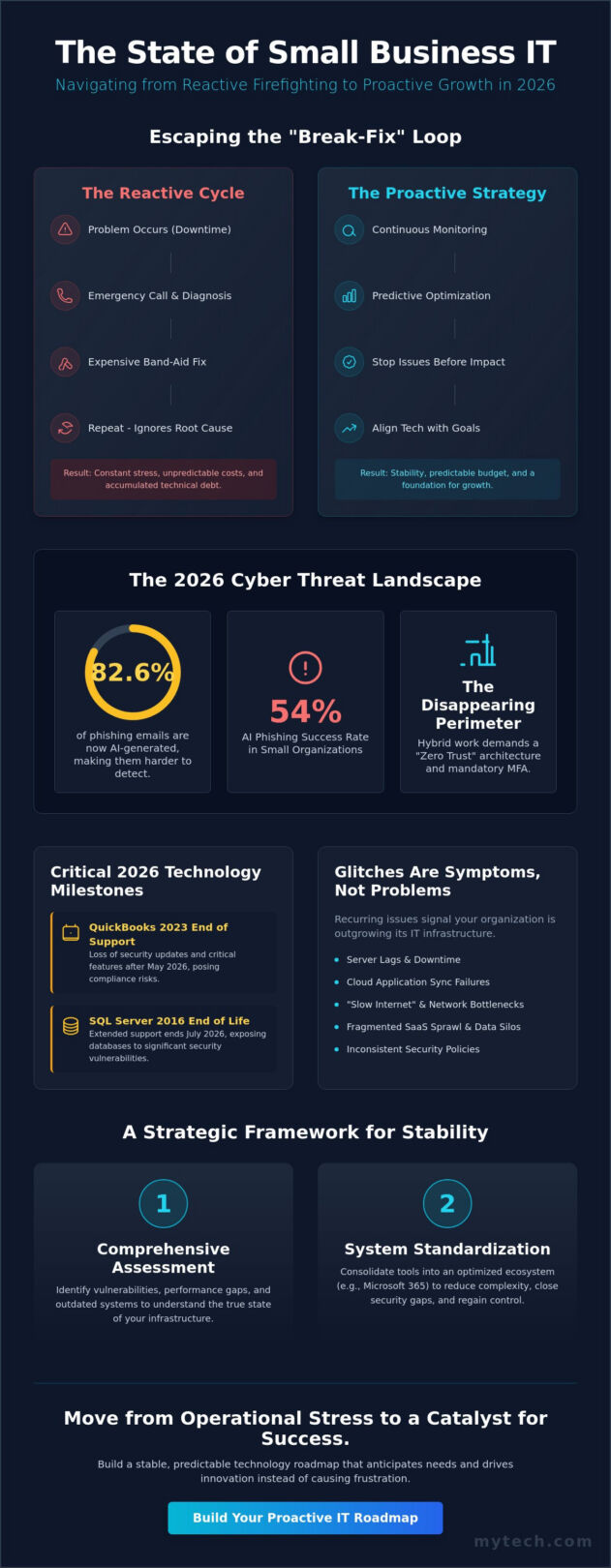
We understand the pressure of maintaining compliance while trying to scale in an environment where 82.6% of phishing emails are now AI-generated. This guide identifies the root causes of recurring tech frustrations and provides the framework to transition from reactive troubleshooting to a proactive, growth-oriented strategy. We’ll examine critical 2026 milestones, including the end of support for QuickBooks 2023 and SQL Server 2016, to help you build a stable, predictable technology roadmap. By the end of this article, you’ll have a clear path to move from operational stress to a secure, reliable environment that acts as a catalyst for your success.
Key Takeaways
- Reframe recurring glitches as symptoms of infrastructure maturity rather than isolated failures to better understand your 2026 operational landscape.
- Calculate the precise cost of technical debt and productivity loss using our “Downtime Formula” to justify strategic technology investments.
- Resolve common IT problems in small businesses by implementing a two-step framework focused on comprehensive assessments and system standardization.
- Identify why internal generalists may struggle with modern security complexities and how an MSP partnership provides a more stable foundation for growth.
Beyond the Glitch: The State of Small Business IT in 2026
Most business leaders view technology disruptions as isolated incidents of bad luck. We see them differently. Frequent common IT problems in small businesses are rarely just technical failures; they’re symptoms of a maturing organization outgrowing its current infrastructure. When a server lags or a cloud application fails to sync, it’s often a sign that your technology foundation lacks the strategic depth required to support your current scale. In 2026, these “glitches” carry higher stakes than ever before.
The current operational landscape is defined by the convergence of three powerful forces: AI-driven automation, the permanence of hybrid work, and increasingly sophisticated cyber threats. For instance, with 82.6% of phishing emails now generated by AI, traditional technical support services that only react to reported issues leave your organization vulnerable. Relying on a “break-fix” model in this environment is no longer viable. It creates a cycle of operational stress where you’re constantly paying to restore the status quo rather than investing in future growth.
True stability comes from strategic alignment. This means matching your technology investments directly to your business objectives. Instead of buying tools to solve immediate frustrations, we focus on building a resilient environment that anticipates needs. This shift moves technology from a line-item expense to a catalyst for success, ensuring your team spends their time on innovation rather than troubleshooting.
The Evolution of the SMB Tech Stack
The transition from local, on-premise servers to cloud-first environments has accelerated. While this shift offers flexibility, it often leads to SaaS sprawl, where a fragmented collection of applications creates security gaps and data silos. In 2026, a “platform” mindset is essential. By consolidating your tools into an optimized ecosystem, such as a refined Microsoft 365 environment, you reduce complexity and regain control over your digital assets.
Reactive vs. Proactive IT Management
Reactive management is a loop of problem, call, fix, and repeat. It’s an expensive way to operate because it ignores the root cause of common IT problems in small businesses. Conversely, a proactive model utilizes continuous monitoring and predictive optimization to stop issues before they disrupt your workflow. The long-term ROI of a proactive approach is significant; it eliminates the high cost of emergency repairs and preserves employee productivity, providing a predictable foundation for your organization’s long-term health.
The Most Persistent IT Challenges Facing Growing Organizations
Growing organizations often reach a tipping point where their initial tech setups no longer suffice. The common IT problems in small businesses at this stage aren’t just annoying; they’re structural. As your team expands and embraces hybrid work, the cracks in your digital foundation become more apparent. We see these challenges as opportunities to build a more resilient infrastructure that supports your long-term vision. Transitioning from a reactive posture to a strategic one is the only way to maintain momentum in 2026.
One of the most significant shifts involves moving beyond basic antivirus software. A single layer of defense is insufficient against modern threats. Effective security requires a multi-layered approach that encompasses everything from endpoint protection to employee awareness training. Aligning your strategy with FTC cybersecurity guidelines ensures you’re covering the basics while preparing for more complex risks like encryptionless extortion.
Cybersecurity in a Decentralized World
The perimeter of your office has disappeared. In 2026, the primary threat isn’t just a brute-force attack; it’s sophisticated social engineering. With AI-powered phishing attacks achieving a 54% success rate in small organizations, your defense must be intelligent and adaptive. We advocate for a Zero Trust architecture where every access request is verified, regardless of its origin. Implementing robust Multi-Factor Authentication (MFA) is no longer optional. It’s a fundamental requirement for securing remote endpoints without hindering your team’s ability to work from anywhere.
Network Performance and Cloud Bottlenecks
Many leaders blame their service providers for slow speeds. However, “slow internet” is frequently a result of internal configuration issues or outdated hardware. As you rely more on Cloud Services for video conferencing and real-time synchronization, your network must be optimized for high-bandwidth traffic. We often find that simple adjustments to router configurations or upgrading to modern hardware can eliminate the cloud bottlenecks that frustrate your staff. Consistency in your network is the backbone of a professional work environment.
Data management also requires a strategic shift. Simply saving files to a drive isn’t a replacement for a comprehensive Business Continuity & Disaster Recovery plan. If your data is compromised or a system fails, you need a roadmap to restore operations quickly. This level of preparedness provides the confidence to grow without fear of catastrophic data loss. If you’re struggling with disconnected systems or slow performance, our Strategic IT Consulting can help you align your software stack for maximum efficiency.
Calculating the Real Impact: Productivity Loss and Technical Debt
Viewing technology as a mere utility leads to a dangerous oversight: the high cost of inaction. When we address common IT problems in small businesses, we aren’t just fixing a computer; we’re stopping a financial leak. Every minute your team spends troubleshooting is a minute they aren’t generating value. To understand the true scale of this issue, we must look beyond the immediate repair bill to the broader economic impact on your organization.
A simple way to quantify this is through the Downtime Formula. Calculate the number of affected employees and multiply that by their average hourly wage. Then, add your estimated lost revenue per hour. This total represents the direct cost of a technical failure. For many, this exercise reveals that “saving money” by delaying an upgrade is actually costing thousands in lost productivity. Beyond the balance sheet, recurring issues erode employee morale. High-performing talent expects reliable tools; when they’re forced to use sub-par systems, frustration leads to turnover, which carries its own significant replacement costs.
The Hidden Costs of “Good Enough” Tech
Old hardware is often a primary source of technical friction. While it might seem frugal to keep a workstation in service for six or seven years, the maintenance costs and performance lags often exceed the price of a modern replacement. There’s also the catastrophic risk of a data breach, which typically costs small businesses between $120,000 and $1.24 million. A single security failure can erase years of brand equity and client trust in an afternoon. Your technology should be an invisible engine; when it becomes visible through failure, your growth stalls.
Compliance also presents a moving target in 2026. With new comprehensive data privacy laws taking effect in Indiana, Kentucky, and Rhode Island, and the mandatory transition to PCI DSS v4.0.1, the legal ramifications of non-compliance are severe. We help our partners navigate these requirements through Strategic IT Consulting, ensuring your infrastructure meets modern standards before a regulatory audit or breach occurs.
Technical Debt: The Compounding Interest of IT
Technical debt is the cost of choosing a quick, temporary fix over a sustainable solution. Like financial debt, it carries interest. In 2026, this interest is coming due for many organizations using end-of-life software. For example, support for QuickBooks Desktop 2023 ends on May 31, 2026, and SQL Server 2016 reaches its end-of-life on July 14, 2026. Continuing to use these systems creates massive security vulnerabilities that no “band-aid” can fix.
Paying down this debt requires a disciplined approach. We prioritize high-interest liabilities, such as unsupported operating systems or fragmented data storage, and replace them with scalable Project Services. This strategic reinvestment stabilizes your environment and converts your technology from a burden into a reliable asset for future growth.
A Strategic Framework for Eliminating Recurring Tech Issues
Solving common IT problems in small businesses requires moving beyond the “fix it when it breaks” mentality. We’ve established that these issues are symptoms of structural gaps. To close those gaps, we follow a disciplined, five-step framework designed to bring stability and predictability to your operations. This isn’t about making technology work; it’s about making technology work for you.
- Step 1: Conduct a Comprehensive IT Assessment. We begin by identifying “shadow IT,” which includes the unauthorized applications or outdated devices that create hidden vulnerabilities.
- Step 2: Standardize Hardware and Software. Complexity is the enemy of uptime. By standardizing your equipment, we reduce the time required for maintenance and ensure every team member has the tools they need.
- Step 3: Implement Layered Security and BCDR. We build a perimeter that includes everything from endpoint protection to a robust Business Continuity & Disaster Recovery plan.
- Step 4: Establish a Technology Roadmap. We look 12 to 24 months ahead to align your tech investments with your growth targets.
- Step 5: Move to a Managed Service Model. This final step ensures continuous optimization, moving your organization from reactive repairs to proactive growth.
Building Your Technology Roadmap
A roadmap provides a clear vision for your future. It allows you to align hardware refresh cycles with your budget, taking advantage of incentives like the 100% bonus depreciation available for technology investments in the 2026 tax year. We focus on scalability, ensuring your systems can support twice the employees without a total overhaul. A key part of this process involves Microsoft 365 optimization. Most businesses only use a fraction of their license’s capabilities; we help you leverage the full power of these tools to maximize your existing investment and improve collaboration.
The Role of Business Continuity and Disaster Recovery (BCDR)
There’s a critical difference between having a “backup” and having a recovery strategy. We focus on your Recovery Time Objective (RTO), which is the actual time it takes to get your business back online after a failure. A plan that isn’t tested is just a document, not a safeguard. We ensure your it support and services include regular BCDR drills. This practice ensures that if a breach or system failure occurs, your team knows exactly how to respond, minimizing downtime and protecting your reputation. To begin building your own resilient foundation, schedule a strategic IT consultation with our team today.
Transitioning to Proactive Management with a Strategic Partner
The burden of managing common IT problems in small businesses often falls on a single internal “generalist.” While these individuals are dedicated, the 2026 digital landscape is simply too complex for one person to master. Between AI-driven phishing and evolving compliance mandates like PCI DSS v4.0.1, the sheer volume of specialized knowledge required is staggering. A generalist often spends their entire day reacting to tickets, which leaves no time for the strategic planning your growth requires. This creates a ceiling for your business, where technology becomes a bottleneck rather than an accelerator.
Transitioning to a Managed Service Provider (MSP) model changes this dynamic entirely. Instead of a single point of failure, you gain access to a disciplined team of experts who specialize in Managed Security Services, Cloud Services, and Strategic IT Consulting. This partnership alleviates operational stress by shifting the responsibility for technical stability to a seasoned guide. We don’t just fix what’s broken; we optimize your environment to ensure it remains a catalyst for success. This proactive approach converts unpredictable repair costs into a manageable, fixed monthly investment.
What to Look for in a Strategic IT Partner
A true partner focuses on your business outcomes rather than just “tickets closed.” You need a team that understands the specific nuances of your industry, whether you operate in healthcare, legal, or manufacturing. While technical skills are vital, the ability to translate those skills into risk management and operational efficiency is what defines a strategic relationship. It’s also beneficial to work with a managed service provider near me who possesses a deep understanding of national standards and local regulatory shifts. This ensures your compliance remains airtight as you expand across state lines and navigate new data privacy laws.
The Mytech Approach: Freedom Through Stability
We believe that technology should provide freedom, not frustration. Our approach is grounded in proactive maintenance and help desk excellence. We move beyond the granular technical issues to address your primary business objectives. By aligning your infrastructure with your long-term goals, we create a stable, secure foundation that allows your team to focus on innovation. This collaborative journey ensures that your operational tools are always assets, never liabilities. Our team is genuinely invested in the long-term health of your organization, acting as a disciplined partner in your digital transformation.
Moving from a reactive posture to a proactive one is the most significant step you can take for your organization’s long-term health. It’s time to stop paying interest on technical debt and start investing in a roadmap that supports your vision. Schedule your Strategic IT Assessment with Mytech Partners today. Together, we’ll eliminate the recurring frustrations of common IT problems in small businesses and build a resilient, secure future for your team.
Building a Resilient Foundation for Future Growth
The landscape of 2026 demands more than just technical fixes; it requires a fundamental shift in how your organization views its digital infrastructure. By identifying the root causes of common IT problems in small businesses, you’ve already taken the first step toward reclaiming your team’s productivity. Moving away from the cycle of technical debt allows you to focus on the growth and innovation that define your business objectives. A stable environment provides the freedom to lead with confidence.
Mytech Partners brings over 20 years of experience in proactive IT management to your organization. Our consultative approach focuses on your long-term health, offering specialized expertise in Cybersecurity and Microsoft 365 optimization. We act as your seasoned guide, ensuring your technology acts as a catalyst for success rather than a recurring frustration. Empower your growth with a Strategic IT Assessment from Mytech Partners. You have the vision to lead your company forward. We have the discipline and experience to ensure your technology supports every step of that journey.
Frequently Asked Questions
What are the most common IT problems for small businesses in 2026?
The most prevalent issues include sophisticated AI-driven social engineering, fragmented cloud applications, and the operational risks of using unsupported software. These common IT problems in small businesses often stem from a lack of infrastructure maturity. We address these challenges by consolidating your tech stack and moving toward a platform mindset that prioritizes security and seamless integration across your entire organization.
How much should a small business spend on IT support and security?
Strategic IT investment usually aligns with your specific growth goals and risk tolerance rather than a flat fee. Most organizations find that a per-user investment model provides the best scalability as they expand. Investing in proactive management reduces the high cost of emergency repairs and preserves your team’s productivity, ensuring your technology remains a catalyst for success rather than a financial liability.
What is the difference between a break-fix provider and a managed service provider?
A break-fix provider reacts only after a failure occurs, while a managed service provider focuses on preventing failures before they disrupt your business. The break-fix model creates a misaligned incentive where the provider profits from your downtime. In contrast, our Managed IT Services align our success with yours by maintaining a stable, optimized environment that minimizes disruptions and supports long-term health.
Is our small business too small to be targeted by cyberattacks?
Smaller organizations are frequently targeted because cybercriminals perceive them as having fewer resources to defend against advanced threats. Attackers often use small businesses as entry points into larger supply chains or focus on them for high-success phishing campaigns. Implementing Managed Security Services ensures you have the layered defense necessary to protect your sensitive data and maintain client trust regardless of your company’s size.
How often should a small business refresh its hardware and software?
We generally recommend a hardware refresh cycle of three to five years to maintain peak performance and compatibility. Software should be updated continuously to avoid the massive security risks associated with end-of-life products. Staying current with these cycles allows you to take advantage of modern features and ensures your team isn’t hindered by slow, unreliable equipment that drains productivity.
What is a technology roadmap and why does my business need one?
A technology roadmap is a strategic plan that aligns your digital tools with your business objectives over a 12 to 24 month period. It provides a clear path for future investments, helping you avoid unexpected expenses and ensuring your infrastructure can scale with your team. This foresight transforms your IT from a reactive expense into a predictable, strategic driver of your organization’s success.
Can managed IT services help with remote and hybrid work challenges?
Managed IT Services provide the secure foundation necessary for a productive hybrid workforce. We utilize Cloud Services and Zero Trust architecture to ensure your team can access essential data from any location without compromising security. This approach eliminates the connectivity bottlenecks and “shadow IT” risks that often frustrate remote employees, allowing for a consistent and professional work experience.
What happens if our data backup fails during a disaster?
A failed backup during a disaster can lead to permanent data loss and catastrophic financial damage. This is why we emphasize Business Continuity & Disaster Recovery plans that include regular testing and verified recovery time objectives. Our goal is to ensure your organization can restore operations quickly, providing the confidence that your digital assets are protected and your business can survive any unforeseen event.