



For the first time in decades, the assumption that technology will get cheaper every year has vanished. With hardware prices already up 20% in early 2026 due to AI-driven demand for RAM and SSDs, the old “wait and see” approach to procurement is now a financial liability. You likely feel the weight of these rising costs, especially when hit with unpredictable “whack-a-mole” expenses that disrupt your cash flow and frustrate your team. Understanding how to create an IT budget for a small business is no longer just about tracking hardware; it’s about building a strategic roadmap that aligns your technology investments with long-term growth.
We’ve designed this guide to help you master the art of IT budgeting through a framework that prioritizes stability and security. You’ll learn how to transition from reactive spending to a predictable monthly model, ensuring your technology empowers employees rather than hindering them. We will walk you through the essential components of a 2026 budget, from managing the 10.8% increase in global IT spending to securing your data against the ransomware attacks that now drive 88% of small business breaches. This is your clear path to a 36 month technology plan that fosters confidence and scale.
Key Takeaways
- Transform your IT budget from a list of expenses into a strategic roadmap that empowers your team and mitigates long-term operational risks.
- Learn how to create an IT budget for a small business through a proven five-step process that starts with a comprehensive technology audit and aligns with your growth goals.
- Identify the five core components of a modern budget and understand why prioritizing cybersecurity is essential for maintaining business continuity in 2026.
- Discover how to eliminate “tech anxiety” by managing technical debt and leveraging OpEx models to create a predictable, stable monthly spend.
- See how strategic consulting and the vCIO model provide the expertise needed to turn complex infrastructure into a catalyst for scalability and productivity.
Why Strategic IT Budgeting is Essential for Business Growth
Technology shouldn’t be a source of constant stress for leadership teams. For many owners, the annual planning process feels like guesswork, leading to a cycle of reactive spending. However, a strategic IT budget acts as a dynamic roadmap for empowerment and risk mitigation. It moves the conversation away from “what broke last month” to “how we grow next year.” By mapping out your investments, you eliminate the “tech anxiety” that stems from unpredictable failures and outdated systems. A strategic IT budget serves as a tool for aligning technical infrastructure with 2026 business objectives.
Shifting your perspective from IT as a cost center to IT as a catalyst for scalability is the first step toward long-term success. When technology is managed strategically, it empowers your workforce and protects your bottom line. Data shows that small businesses with 1 to 49 employees typically spend 6.9% of their revenue on IT to remain competitive. This proactive approach ensures you aren’t just maintaining the status quo; you’re building a foundation for sustainable growth that can withstand market shifts.
The High Cost of Reactive IT Management
Relying on a “whack-a-mole” approach to technology creates a volatile financial environment. When you only spend money when things break, emergency repairs derail your annual cash flow and often carry premium “emergency” rates. Beyond the repair bill, the hidden cost of employee downtime is staggering. If your team works on aging tech, even small delays accumulate into hundreds of lost hours each year. Security risks present the most significant danger; with the average cost of a data breach for small businesses hitting $3.31 million in 2026, under-budgeting for cybersecurity is no longer a viable option. Reactive management is a gamble that eventually results in a “balloon payment” of risk and cost.
Aligning Technology with Your Business Roadmap
Effective technology management requires a bridge between C-suite vision and technical execution. As you look toward 2026, your goals might include deeper AI integration or supporting a permanent hybrid workforce. These aren’t just business ideas; they are technical requirements that need funding and planning. Learning how to create an IT budget for a small business ensures that your infrastructure supports these moves rather than blocking them. Partnering with professional it support and services allows you to maintain this alignment, ensuring every dollar spent drives productivity and scalability. We believe technology should be a partner in your journey, not a hurdle to overcome.
The Core Components of a Modern IT Budget
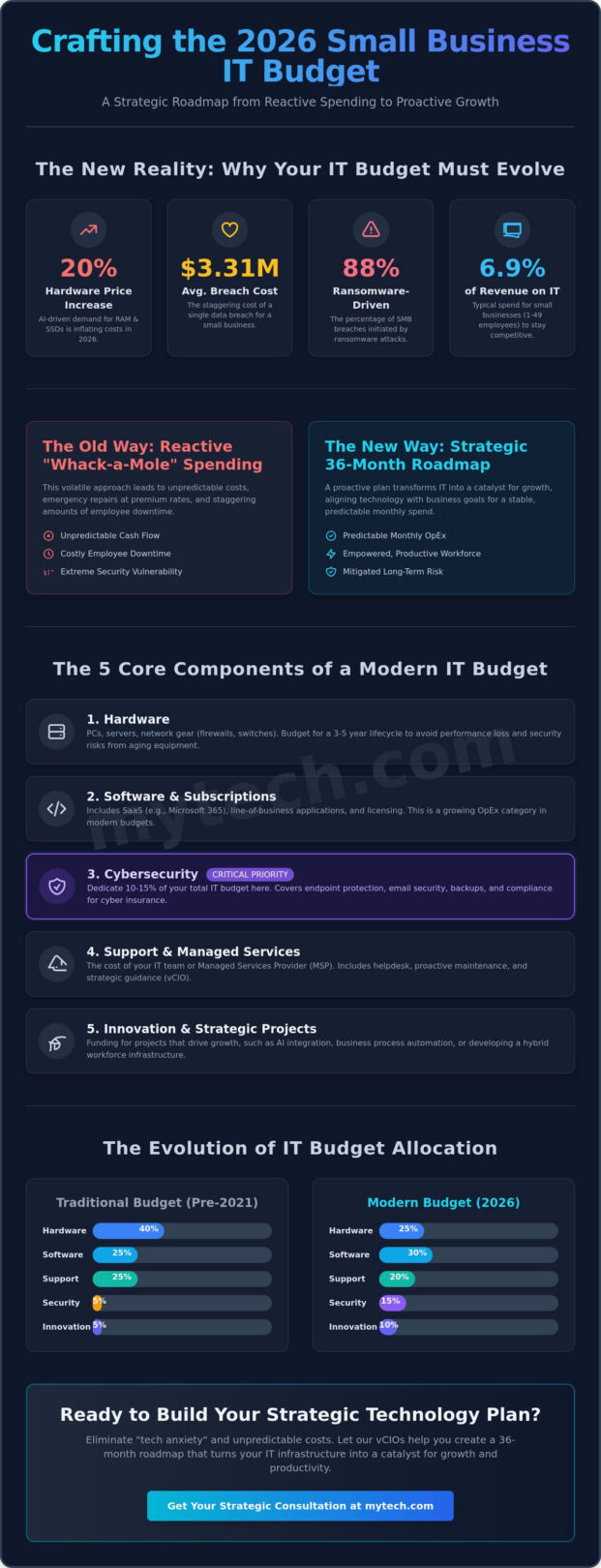
Building a resilient financial plan for your technology requires more than just listing upcoming hardware needs. To understand how to create an IT budget for a small business in 2026, you must categorize your spending into five primary buckets: Hardware, Software, Security, Support, and Innovation. This structure ensures that your capital isn’t just maintaining old systems but is actively driving business value. While traditional budgets focused heavily on physical servers, modern allocations prioritize security and cloud agility to keep pace with a 10.8% projected increase in global IT spending this year.
Cybersecurity now demands a significantly larger portion of your total spend than it did five years ago. Experts recommend dedicating 10% to 15% of your total IT budget to security measures. This shift is driven by the rising complexity of threats and the stringent requirements of cyber insurance providers. Without this investment, you risk catastrophic recovery costs that far exceed the price of proactive protection. Integrating comprehensive IT budget steps into your planning helps ensure these critical security layers aren’t overlooked during fiscal reviews.
| Budget Category | Traditional Allocation (Pre-2021) | Modern Allocation (2026) |
|---|---|---|
| Hardware & Infrastructure | 45% – 55% | 25% – 30% |
| Cybersecurity | 3% – 5% | 10% – 15% |
| Cloud & SaaS Subscriptions | 10% – 15% | 30% – 35% |
| Support & Strategic Consulting | 20% – 25% | 20% – 25% |
Hardware and Infrastructure Lifecycle Management
Despite the shift toward the cloud, physical hardware remains a critical foundation. Establishing a 3 to 5 year refresh cycle for workstations and networking gear prevents the productivity loss associated with legacy equipment. However, you must account for the 15% to 20% price increase seen in hardware costs since early 2026. If you manage a hybrid team, your budget should also include mobile device management (MDM) tools to secure company data on various endpoints. Transitioning to cloud-first infrastructure can reduce on-premise hardware needs, but it requires strategic planning to balance these new operational costs. If you’re feeling overwhelmed by these shifts, our managed IT services can help streamline your infrastructure planning.
Software, Licensing, and Cloud Subscriptions
Software spending often spirals out of control without regular audits. “Zombie” licenses from former employees or redundant SaaS tools can quietly drain your budget. In 2026, focus on Microsoft 365 optimization to ensure you’re utilizing the full security and AI capabilities you’re already paying for. Remember to factor in annual price increases from major software vendors, which often range from 5% to 10%. By centralizing your subscription management, you gain better visibility into your true monthly spend and ensure your team has the tools they need to thrive without unnecessary waste.
Managing Technical Debt and the CapEx vs. OpEx Debate
Technical debt is a silent growth killer that often goes unnoticed until it’s too late. It represents the accumulated cost of choosing “quick fixes” or delaying necessary upgrades. When you ignore legacy systems, you aren’t just saving money; you’re creating a “balloon payment” of risk and cost that will eventually come due. This debt compounds through lost productivity, frequent system failures, and increased vulnerability to cyberattacks. When you analyze how to create an IT budget for a small business, you must account for these hidden liabilities to ensure your foundation remains secure.
Historically, IT was a Capital Expenditure (CapEx) heavy department, requiring large, upfront cash injections for servers and workstations. Today, the shift toward Operating Expenditure (OpEx) offers a more sustainable path for growing organizations. Instead of massive, unpredictable hardware bills every few years, you pay a steady monthly fee for cloud resources and software. This transition to it support and managed services provides the financial flexibility needed to scale without draining your cash reserves during a refresh cycle.
Identifying and Remediating Technical Debt
If your employees lose 15 minutes a day to slow performance or frequent crashes, you’re already paying interest on your technical debt. These small frustrations signal that your infrastructure is reaching a breaking point. We recommend allocating a specific “remediation fund” in your annual budget to modernize these critical systems. Paying down this debt through strategic refreshes yields a high ROI by boosting productivity and closing security gaps that hackers love to exploit. A proactive refresh strategy prevents the sudden, catastrophic failures that derail annual cash flow.
The Financial Advantage of Managed IT Services
When planning how to create an IT budget for a small business, the shift to managed IT services transforms your technology from a variable expense into a fixed utility. For businesses with 10 to 50 employees, the average cost for managed services typically stays between $100 and $250 per user per month. This OpEx model allows for better cash flow management and provides significant tax advantages, as these costs are often fully deductible in the year they are incurred. Finding a managed service provider near me ensures you have a partner who turns unpredictable “break-fix” bills into a steady, manageable line item. This is the gold standard for any business aiming for financial stability in 2026.
A 5-Step Process to Create Your IT Budget
Planning for the next 12 to 36 months requires a disciplined approach that moves beyond simple spreadsheet entries. As global IT spending is projected to rise by 10.8% in 2026, staying ahead of the curve is essential for maintaining a competitive edge. Learning how to create an IT budget for a small business involves more than just listing expenses; it requires a deep understanding of your current environment and your future aspirations. By following a structured five step process, you can transform your technology from a source of anxiety into a predictable engine for growth.
- Step 1: Perform a Comprehensive Technology Audit. You cannot manage what you haven’t measured. This initial phase involves a complete inventory of every piece of hardware, software license, and network protocol in your organization.
- Step 2: Review Business Goals and Roadmaps. Align your technical spending with your 2026 objectives. If you plan to scale your workforce by 20% or integrate new AI tools, your budget must reflect these specific initiatives.
- Step 3: Categorize Fixed vs. Variable Costs. Distinguish between recurring operational expenses like Microsoft 365 subscriptions and one-time capital projects like a network overhaul.
- Step 4: Factor in Cybersecurity and Compliance. With 88% of small business data breaches involving ransomware in 2026, security is a non-negotiable line item.
- Step 5: Review and Refine with a Strategic Partner. Validate your assumptions with a “Trusted Navigator” who can spot hidden risks or opportunities for optimization.
The IT Audit: Knowing What You Have
Success begins with a clear picture of your starting point. During your audit, document the age of every workstation and server, ensuring you account for the 20% price increase in hardware components seen since early 2026. This is also the time to identify “Shadow IT,” which includes unauthorized applications used by employees without leadership approval. These hidden tools create security gaps and redundant costs that drain your resources. A thorough technology audit serves as the essential foundation for any defensible and strategic IT budget.
Forecasting for Cybersecurity and Business Continuity
Cyber insurance providers now demand higher standards for coverage, making layered security a budgetary priority. You must allocate funds for Multi-Factor Authentication (MFA), Endpoint Detection and Response (EDR), and regular employee training. Investing in specialized cybersecurity services ensures you meet these insurance mandates while protecting your $3.31 million average breach recovery cost. Additionally, ensure your disaster recovery and backup systems are fully funded and tested regularly. Since 47% of businesses with fewer than 50 employees still lack a dedicated security budget, a proactive stance here provides a significant market advantage. If you need help identifying these critical gaps, our team can provide a strategic IT consulting session to align your spend with your risk profile.
Leveraging Strategic Consulting for Long-Term Value
Budgeting for technology shouldn’t be a solitary task performed once a year in a vacuum. To truly understand how to create an IT budget for a small business that drives growth, you need a partner who looks beyond the price of a laptop. This is where a Virtual CIO (vCIO) becomes an essential asset. A vCIO doesn’t just manage tickets; they act as a strategic partner who aligns every technical dollar with your corporate vision. By bridging the gap between your balance sheet and your infrastructure, they ensure your technology investments actually fuel productivity rather than just maintaining the status quo.
We believe that moving from a “spending” mindset to an “investing” mindset is the key to business longevity. When you treat IT as an investment, you’re looking for a return in the form of employee empowerment, reduced risk, and smoother scalability. A strategic partner helps you navigate the complexities of the 2026 market, including managing hardware and software resale and overseeing complex project implementations. This collaborative approach turns your IT department from a source of “tech anxiety” into a stable foundation for your future success.
The vCIO: Your Trusted Navigator in Tech Planning
A vCIO provides the high-level expertise of a seasoned executive at a fraction of the cost of a full-time hire. This leadership is critical when you’re trying to figure out how to create an IT budget for a small business that accounts for the 10.8% rise in global IT spending. Through Quarterly Business Reviews (QBRs), your vCIO keeps your budget on track by adjusting for real-world changes and emerging threats. We help you build a 3 year technology roadmap that anticipates hardware refreshes and software upgrades, effectively preventing those sudden, expensive budget surprises that derail your annual cash flow.
Choosing a Partner for Proactive IT Management
Choosing the right partner means finding a team that prioritizes your ability to thrive. At Mytech, our focus on empowerment changes the budgeting conversation from “what does this cost” to “what does this enable.” We provide value through fixed-fee project implementation, which ensures that major upgrades or cloud migrations don’t result in runaway expenses. By managing the entire lifecycle of your assets, we help you mitigate the 15% to 20% price increases currently affecting the hardware market. It’s time to stop reacting to failures and start building a secure, predictable future for your organization. Contact Mytech Partners to start building your strategic IT roadmap today.
Take Command of Your Technology Roadmap
Mastering how to create an IT budget for a small business is the bridge between surviving and thriving in 2026. By moving away from reactive spending and embracing a proactive OpEx model, you secure the financial freedom to scale. We’ve seen how a disciplined audit and a clear 36 month plan can eliminate the “tech anxiety” that often plagues leadership teams. With global IT spending reaching $6.15 trillion this year, your organization needs a strategy that protects your bottom line while empowering your employees.
Since 2000, Mytech Partners has served as a “Trusted Navigator” for organizations across the nation. We include proactive vCIO services in our managed agreements to ensure your technology remains a catalyst for success rather than a hurdle. Whether you’re addressing technical debt or optimizing your Microsoft 365 environment, we provide the strategic alignment you need to stay ahead of the competition. Download our Strategic IT Budgeting Template or Schedule a Consultation to begin building your roadmap today. Your journey toward a more stable and secure infrastructure starts with a single, purposeful step.
Frequently Asked Questions
What percentage of revenue should a small business spend on IT?
Small businesses typically spend between $1,000 and $3,500 per employee annually on technology. This investment ensures each team member has the necessary hardware, software, and security protocols to remain productive. Aligning your budget with these industry benchmarks helps you maintain a competitive edge without overextending your financial resources. It provides a clear baseline for your long-term fiscal planning.
How do I handle unexpected IT expenses that aren’t in the budget?
Unexpected expenses are best managed by shifting away from the “break-fix” model. Relying on hourly support, which can cost between $125 and $350 per hour in 2026, often leads to significant budget overruns. By utilizing a managed services agreement, you turn these unpredictable repairs into a stable, fixed monthly cost. This approach protects your cash flow and ensures rapid resolution of technical issues.
Is cloud computing cheaper or more expensive for a small business budget?
Cloud computing generally reduces total cost of ownership by replacing high capital outlays with flexible operational costs. It eliminates the need for expensive on-site server rooms and the associated cooling and maintenance bills. This model allows you to scale your resources up or down based on your current workforce needs. You only pay for what you use, which prevents wasting capital on idle hardware.
How often should I refresh my hardware (PCs and laptops)?
Establishing a hardware refresh every 3 to 5 years is the most effective way to avoid the hidden costs of aging technology. With DDR5 memory prices potentially doubling and general RAM costs rising up to 70% this year, waiting too long to upgrade is a costly mistake. Proactive planning allows you to lock in pricing before further market increases while ensuring your team has high-performance equipment.
What is the difference between CapEx and OpEx in IT budgeting?
CapEx refers to major upfront investments in physical assets, while OpEx covers ongoing monthly expenses for services. When researching how to create an IT budget for a small business, you’ll find that the OpEx model is increasingly popular for its predictability. It provides greater tax flexibility and ensures your technology remains current through regular subscription updates rather than massive, infrequent hardware purchases.
Do I need to budget for cybersecurity insurance?
Budgeting for cybersecurity insurance is a critical component of a modern risk management strategy. Small and medium-sized businesses are projected to spend $109 billion on cybersecurity by 2026 to combat increasingly sophisticated threats. Most insurers now require proof of specific security measures, such as active monitoring and management, before they will issue a policy. Funding these controls is essential to maintain your coverage and protect your reputation.
How can a managed service provider help me with budgeting?
A managed service provider serves as a strategic guide to ensure your technology spending drives actual business value. They provide the executive-level oversight of a vCIO to help you build a roadmap for the next 12 to 36 months. This partnership helps you identify redundant software licenses and optimize your cloud spend to eliminate waste. They turn complex technical requirements into manageable financial line items.
What are the most common IT budgeting mistakes for small businesses?
A major mistake is failing to account for the projected 30% increase in hardware costs expected by the end of 2026. Many businesses also underestimate the soft costs of employee downtime caused by legacy systems. Finally, neglecting to align technical spending with your specific business growth goals often leads to wasted capital on unnecessary tools that don’t support your primary objectives or scalability needs.